Understanding Fox SVG, DXF, EPS, JPG, and PNG: A Practical Guide to Digital Vector and Raster Formats
When it comes to digital design and graphic creation, the choice of file format can significantly impact the quality, versatility, and usability of your work. One popular offering in this space is Fox SVG, DXF, EPS, JPG, and PNG, which provides a comprehensive set of files tailored for designers, developers, and creators who need high-quality, scalable, and editable graphics. This article explores what these formats are, how they differ, and when they might be the best fit for your projects.
What Are SVG, DXF, EPS, JPG, and PNG?
Each of these file types serves a unique purpose in the world of digital media. Understanding their strengths and limitations can help you decide which one to use depending on your needs.
SVG (Scalable Vector Graphics)
SVG is a vector-based format that uses mathematical equations to define shapes, lines, and curves. This makes it ideal for logos, icons, and other graphics that need to scale without losing quality. SVG files are typically small in size and can be edited easily using tools like Adobe Illustrator or online editors.
DXF (Drawing Exchange Format)
DXF is primarily used in engineering and architectural design. It allows for precise 2D and 3D modeling and is widely supported by CAD software. Unlike SVG, DXF is more focused on technical accuracy and is often used in construction and manufacturing industries.
EPS (Encapsulated PostScript)
EPS is another vector format that supports both vector and bitmap graphics. It is commonly used in print publishing and graphic design due to its ability to maintain high resolution and compatibility with various applications. EPS files are particularly useful for creating illustrations that need to be scaled for different purposes.
JPG (Joint Photographic Experts Group)
JPG is a raster image format that uses lossy compression to reduce file size. It is well-suited for photographs and complex images with many colors. However, because of its compression, JPG files may lose some detail and quality, especially after multiple edits or resizes.
PNG (Portable Network Graphics)
PNG is also a raster format but uses lossless compression, meaning no data is lost during the compression process. This makes it ideal for web graphics, screenshots, and images with transparent backgrounds. PNG files tend to be larger than JPGs, but they offer better quality and flexibility in terms of transparency and color depth.
Why Choose Fox SVG, DXF, EPS, JPG, and PNG?
The Fox SVG, DXF, EPS, JPG, and PNG package offers a diverse range of files that cater to different design and production needs. Whether you're working on a logo, an architectural blueprint, or a website banner, having access to multiple file types ensures that your project can be adapted to various platforms and requirements.
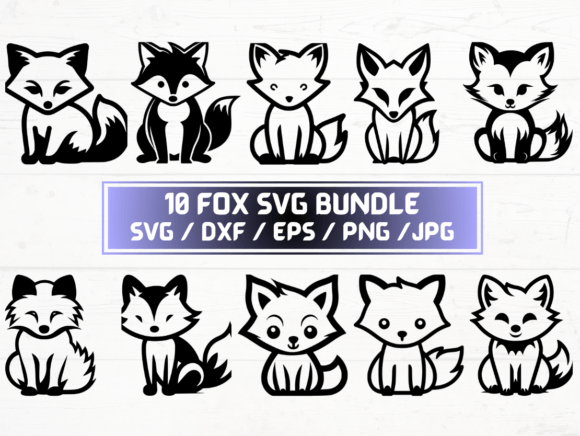
This product includes a ZIP folder containing five sets of files: 90 SVG, 90 PNG, 90 DXF, 90 JPG, and 90 EPS files, all at 300 dpi with transparent backgrounds. The availability of these files in bulk makes it easier for professionals and hobbyists alike to access high-quality assets without the hassle of individual downloads.
Comparing Fox SVG, DXF, EPS, JPG, and PNG With Alternatives
While Fox SVG, DXF, EPS, JPG, and PNG is a versatile option, it's important to consider alternatives based on specific use cases. For instance, if you're working on a project that requires high-resolution printing, EPS or PDF might be more suitable. On the other hand, if you're designing for the web, PNG or SVG would be the better choice due to their scalability and compatibility with online platforms.
Another consideration is the intended audience. If your design is meant for a broad audience, including both print and digital users, having access to multiple file types ensures that your work remains consistent across all mediums. However, if your project is highly specialized—such as a technical drawing or a detailed illustration—DXF or EPS could provide the precision needed.
Use Cases and Best Practices
Let’s explore some practical scenarios where Fox SVG, DXF, EPS, JPG, and PNG might be the right choice:
- Logo Design: SVG is ideal for logos since it maintains clarity at any size. Using SVG alongside PNG allows for both web and print use.
- Architectural Drawings: DXF files are essential for technical drawings and blueprints, ensuring accuracy and compatibility with CAD software.
- Web Development: PNG and SVG are preferred for web graphics due to their scalability and support for transparency.
- Print Media: EPS files are excellent for high-resolution prints, especially in publications and advertising materials.
- Photography: JPG is a go-to format for photographs due to its efficient compression and widespread support.
It’s also worth noting that while Fox SVG, DXF, EPS, JPG, and PNG provides a wide array of options, it's not always necessary to use all of them. Depending on your project’s goals, selecting the most appropriate format can save time and ensure optimal results.
Limitations and Trade-Offs
No single file format is perfect for every situation. Each has its own set of advantages and drawbacks. For example, while SVG is great for scalability, it may not be the best choice for complex images with gradients or textures. Similarly, JPG’s compression can lead to quality loss, making it unsuitable for images that require high fidelity.
Additionally, the inclusion of multiple file types in Fox SVG, DXF, EPS, JPG, and PNG means that users must manage a larger collection of files. This can be overwhelming for beginners or those who prefer simplicity. However, for professionals who frequently work across different mediums, the convenience of having all these files in one place is invaluable.
Making an Informed Decision
Choosing the right file format depends on several factors, including the nature of your project, the intended use of the files, and the platforms you’ll be working with. Fox SVG, DXF, EPS, JPG, and PNG offers a balanced solution by providing access to a variety of formats that can meet diverse needs.
If you're looking for a reliable and comprehensive resource for your design and development projects, Fox SVG, DXF, EPS, JPG, and PNG is a solid choice. However, it's always wise to evaluate your specific requirements before committing to a particular format or product.