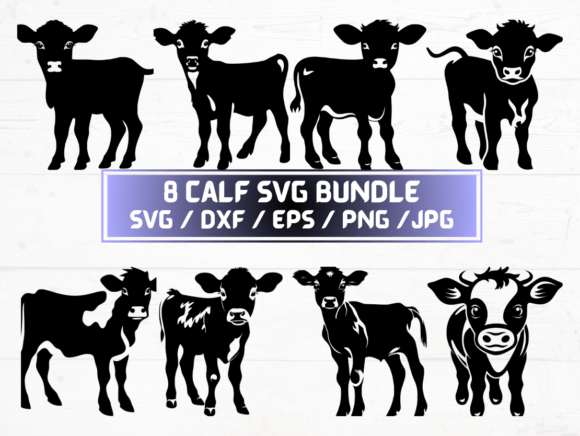
Understanding Calf SVG, DXF, EPS, JPG, and PNG Files for Creative Projects
Whether you're a graphic designer, a small business owner, or someone looking to create digital content, understanding the different file formats like Calf SVG, DXF, EPS, JPG, and PNG can make a significant difference in your workflow. This article explores these formats, their uses, and how they fit into various creative projects.
What Are Calf SVG, DXF, EPS, JPG, and PNG Files?
Calf SVG refers to Scalable Vector Graphics files specifically created for calf-related designs. These are vector-based images that maintain quality at any size, making them ideal for logos, illustrations, and branding materials. Alongside DXF (Drawing Exchange Format), which is commonly used in CAD software, EPS (Encapsulated PostScript) files offer high-quality vector graphics suitable for print and digital use.
JPG and PNG are raster image formats. While both are widely used, JPG is best for photographs due to its efficient compression, while PNG supports transparency and is preferred for web graphics and icons. Together, these formats provide a versatile toolkit for designers and creators.
Why Choose These Formats?
- SVG files are resolution-independent, meaning they scale without losing quality, making them perfect for responsive web design and print.
- DXF files are essential for technical drawings, architecture, and engineering projects where precision matters.
- EPS files are compatible with most design software and retain vector quality, ensuring consistent results across platforms.
- JPG files are great for fast loading on websites and social media due to their compressed nature.
- PNG files are ideal for web graphics, especially when transparency is required, such as overlays or icons.
Where Can You Use These Files?
The versatility of Calf SVG, DXF, EPS, JPG, and PNG makes them applicable across a wide range of industries and projects:
Graphic Design and Branding
Designers often use SVG and EPS files for creating logos and brand assets. Their scalability ensures that your logo looks sharp on everything from business cards to billboards. JPG and PNG files are also useful for social media content, website banners, and email marketing campaigns.
Web Development
In web development, SVG files are particularly valuable because they can be embedded directly into HTML, reducing load times and improving performance. PNG files are commonly used for icons and background images, while JPG files are ideal for larger images like product photos.
Print and Publishing
For print projects, EPS and DXF files ensure that your designs remain crisp and clear, even when printed at large sizes. JPG files are often used for digital publications and online portfolios, while PNG files can be used for text overlays and other elements that require transparency.
Who Benefits from These File Formats?
These file formats cater to a diverse audience, including:
- Graphic designers who need scalable and editable assets for various projects.
- Small business owners looking to create professional-looking materials without expensive software.
- Freelancers who work across multiple platforms and need compatibility with different design tools.
- Online creators who rely on high-quality images for content creation and social media engagement.
- Students and educators who use these formats for presentations, infographics, and educational materials.
Strengths and Considerations
While these formats offer numerous benefits, it's important to understand their limitations:
Strengths
- SVG and EPS files maintain quality at any size, making them ideal for scalable designs.
- DXF files are precise and widely supported in CAD software, making them perfect for technical drawings.
- JPG files are lightweight and easy to share, making them suitable for quick uploads and downloads.
- PNG files support transparency and are excellent for web graphics and icons.
Considerations
- SVG files may not be supported by all older software or browsers.
- DXF files can be complex and may require specialized software to edit.
- JPG files lose quality with compression, so they are not ideal for detailed graphics.
- PNG files tend to be larger in file size compared to JPG files, which can affect loading times.
Real-World Applications
Let’s look at some real-world scenarios where these formats are used:
Logo Design
A small business owner might use an SVG file to create a logo that can be used across multiple platforms—from a website to printed materials—without losing quality.
Product Photography
An e-commerce store might use JPG files for product photos due to their fast loading times and high visual quality, while using PNG files for product labels and overlays.
Technical Drawings
An architectural firm might use DXF files for blueprints and schematics, ensuring that every detail remains accurate and editable.
Web Icons
A web developer might use PNG files for icons and buttons, taking advantage of their transparency features to create clean, modern interfaces.
Evaluating Suitability for Your Needs
Choosing the right format depends on your specific project requirements:
- If you need a scalable, editable graphic for branding, choose SVG or EPS.
- If you're working on a technical drawing or blueprint, DXF is the best choice.
- If you're uploading images to a website, JPG offers a good balance between quality and file size.
- If you need transparency or a simple graphic, PNG is the way to go.
It’s also worth considering the software you’re using. Some programs only support certain formats, so always check compatibility before starting a project.
Conclusion
Calf SVG, DXF, EPS, JPG, and PNG files are powerful tools that can enhance your creative workflow and improve the quality of your digital content. Whether you're designing logos, creating technical drawings, or building a website, understanding these formats will help you make informed decisions and achieve better results.
When choosing between these formats, consider your project’s needs, the software you use, and the final output you want. With the right format, you can create stunning visuals that look great on any platform.